

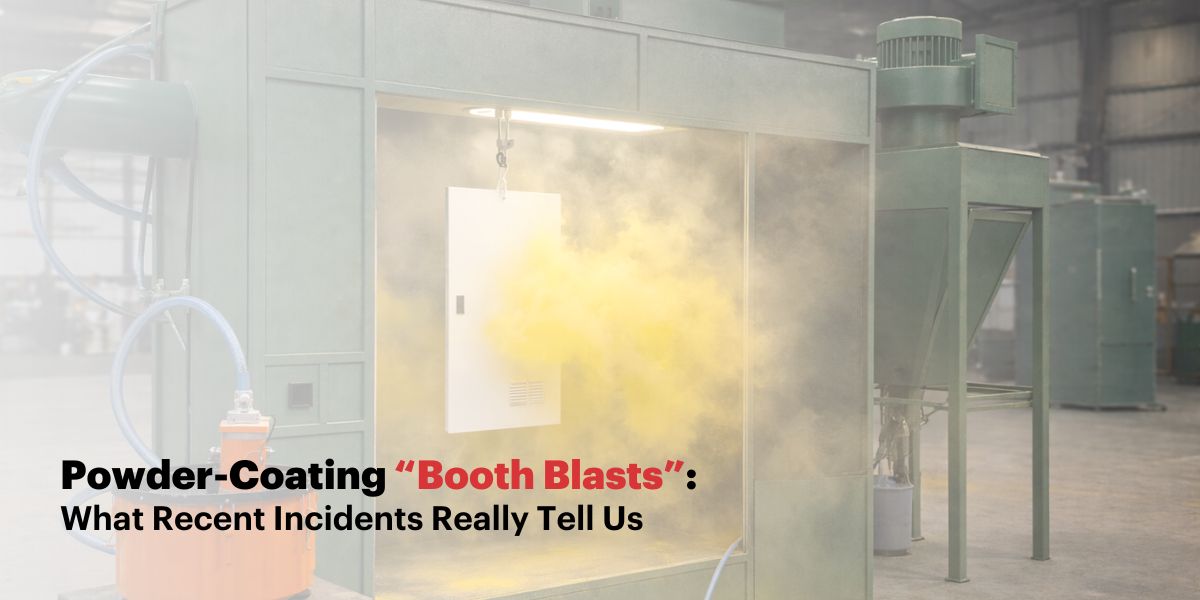
Across the last few years, multiple news reports have used phrases like “powder-coating unit blast”—but when you read the incident details, a key pattern emerges: many of these were not powder-dust explosions inside the booth itself. They were more often linked to fuel gas, ovens/furnaces, or boilers, with fires and injuries happening as a downstream effect.
| Date (reported) | Location | Where the “blast” happened | Reported / suspected reason |
| 4 Jul 2022 | Vadodara, Gujarat (Sardar Estate) | Electric furnace at a powder-coating firm | Blast in the furnace; report does not confirm why |
| 28 Dec 2023 (incident happened a day earlier, per article) | Pune, Maharashtra (Hinjewadi Phase-I) | Gas oven used in the powder-coating process | Temperature control issue reported by an injured worker; explosion occurred around shutdown; cause under investigation |
| 24 Jun 2024 | Ahmedabad, Gujarat (Odhav) | Boiler at a powder-coating factory | Boiler explosion; cause not immediately known (FSL team called, per report) |
| 29 Nov 2025 (reported Dec 1–3) | Pune, Maharashtra (Bhosari MIDC) | “Blast inside the unit” at Ambika Powder Coating (followed by fire) | Preliminary/likely LPG leak → vapour cloud blast; multiple cylinders mentioned as escalation risk |
Practical takeaway for powder-coating plants
Treat safety as two layers running together:
- Booth layer: grounding, airflow/filtration, housekeeping, no bypass of interlocks.
- Energy layer: LPG/PNG integrity checks, oven/furnace control validation, safe shutdown routines, and strict boiler/pressure-system compliance.
For plants that want to reduce these risks, the direction is clear: stop treating heat as a “utility” and start treating it as a safety-critical system. Many incidents trace back to poorly designed or poorly maintained ovens, burners, gas trains, and fuel setups—especially when operations rely on **LPG cylinders, makeshift piping, loose regulators, or local “adjustments” to keep production running. Add overloaded conveyors, weak airflow, and bypassed interlocks, and a small leak or control failure can escalate fast.
This is why buyers and owners must take finishing safety seriously at the purchase stage—not after an accident. Look for systems that are engineered with proper combustion controls, verified temperature control and shutdown logic, leak-safe gas handling, reliable interlocks, and monitoring of airflow and filtration, along with clear maintenance access and standard operating routines.
Intech’s role as a finishing solutions partner is to help plants move away from patchwork setups and toward properly engineered, validated finishing lines—where ovens and burners are sized correctly, safety controls are built into the workflow, and operating discipline is easy to follow. The result is simple: safer people, lower downtime, and consistent coating quality.