

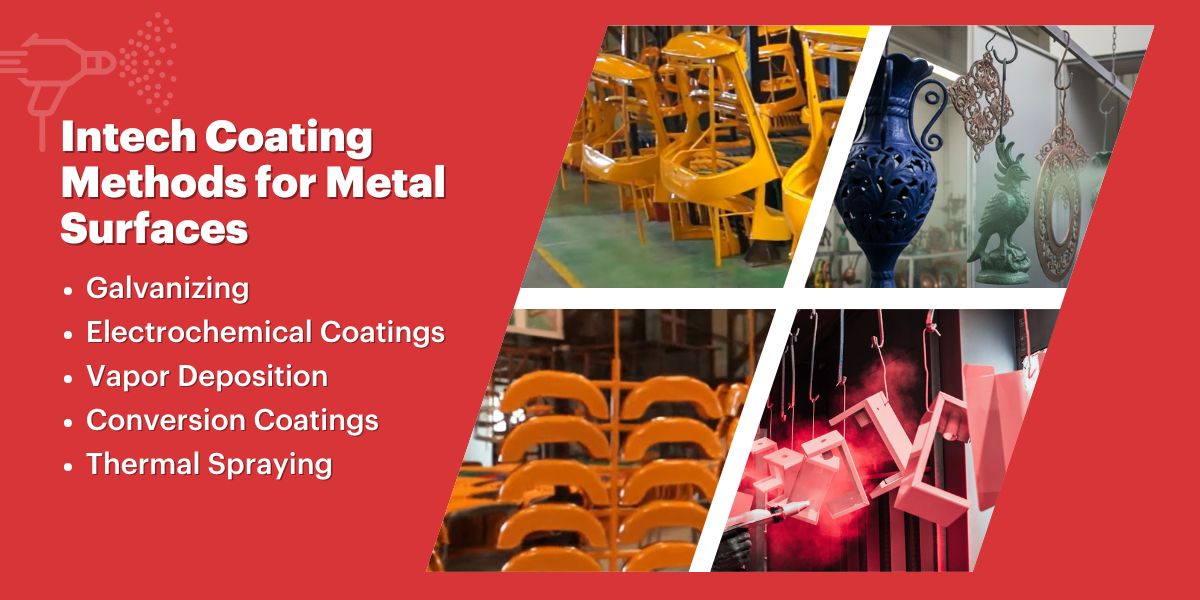
In the industrial manufacturing, the battle against corrosion is constant. Every metal surface from structural steel beams to precision-engineered components faces relentless threats from oxidation, moisture, chemicals and environmental wear. Without proper protection, even the strongest metals succumb to rust, leading to equipment failure, safety hazards, and costly downtime.
This is where metallic coatings become indispensable. By applying a thin layer of metal or metal alloy onto a substrate, industries can dramatically extend asset life, enhance performance, and maintain aesthetic appeal. But with multiple technologies available, choosing the right coating requires understanding their distinct properties and applications.
In this guide, we explore the primary types of metallic coatings, their industrial uses and the tangible benefits they deliver.
1. What Are Metallic Coatings?
Metallic coatings are protective layers composed of metallic elements or alloys applied to the surface of a base material typically steel, iron, or other metals. The coating acts as a sacrificial barrier, corroding in place of the substrate, or as a passive barrier, sealing the surface from corrosive elements. Application methods vary widely, from hot-dipping and electroplating to thermal spraying and cladding.
The right coating not only prevents rust but can also enhance electrical conductivity, improve solderability, reduce friction, or provide a decorative finish.
The 5 Primary Types of Metallic Coatings
1. Galvanizing (Zinc Coating)
Galvanizing is one of the most widely used methods for protecting steel and iron. The process involves immersing the base metal in a bath of molten zinc at approximately 450°C. A metallurgical bond forms between zinc and steel, creating a series of zinc-iron alloy layers topped by pure zinc.
When exposed to the atmosphere, zinc reacts to form a stable, adherent zinc carbonate layer. This layer provides cathodic protection meaning zinc sacrifices itself to protect the underlying steel, even if the coating is scratched.
Common Applications:
Structural steel (bridges, transmission towers)
Automotive chassis components
Outdoor railings and fencing
Electrical conduit and hardware
2. Electroplating
Electroplating uses an electric current to reduce dissolved metal cations, depositing a thin, adherent metallic coating onto a conductive surface. The part to be plated acts as the cathode in an electrolyte solution containing the coating metal’s ions. A metal anode completes the circuit.
This method allows precise control over coating thickness and composition, producing smooth, uniform layers even on complex geometries.
Common Applications:
Decorative chrome on automotive trim
Gold plating on electronic connectors
Zinc plating on fasteners and hardware
Tin plating on food cans
3. Anodizing
Anodizing is an electrochemical process that thickens the natural oxide layer on the surface of metal parts. Unlike other coatings that add a layer, anodizing converts the existing surface into a durable, corrosion-resistant oxide finish. While commonly associated with aluminum, anodizing can also be applied to titanium, magnesium, and other non-ferrous metals.
The resulting oxide layer is integrated with the substrate, meaning it cannot peel or chip. It also creates a porous structure that can accept dyes for decorative coloring.
Common Applications:
Architectural aluminum (window frames, curtain walls)
Consumer electronics (smartphone bodies, laptop casings)
Cookware and kitchen appliances
Aerospace components
4. Thermal Spraying (Metal Spraying)
Thermal spraying involves heating metallic materials (in wire or powder form) to a molten or semi-molten state and propelling them onto a prepared surface. Upon impact, particles flatten and solidify, building up a dense, mechanically bonded coating.
This versatile method can apply thick coatings of virtually any metal or alloy onto almost any substrate, with minimal heat input to the base material.
Common Applications:
Corrosion protection on large structures (bridges, offshore platforms)
Restoration of worn machinery components
Anti-slip coatings on marine decks
High-temperature oxidation barriers
5. Paint Coatings with Metallic Pigments
While not a pure metallic coating, metallic paints contain finely dispersed metal particles (aluminum, zinc, bronze, or stainless steel) in a binder system. These coatings combine the barrier protection of organic films with the reflective and sacrificial properties of metals.
Zinc-rich paints, for example, provide cathodic protection similar to galvanizing, while aluminum-pigmented coatings offer excellent UV reflectivity and heat resistance.
Common Applications:
Industrial maintenance painting
Automotive refinish coatings
Anti-corrosion primers for structural steel
Decorative architectural finishes
Comparison: Selecting the Right Metallic Coating
| Coating Type | Typical Thickness | Application Method | Key Strengths | Best Suited For |
| Galvanizing | 50-150 µm | Hot-dip immersion | Cathodic protection, durability | Large steel structures, outdoor exposure |
| Electroplating | 5-25 µm | Electrolytic bath | Precision, smooth finish, conductivity | Small components, decorative parts |
| Anodizing | 5-30 µm | Electrochemical conversion | Wear resistance, integral color | Aluminum parts, consumer goods |
| Thermal Spraying | 100-500+ µm | Flame/plasma arc spray | Thick coatings, field application | Large components, repair work |
| Metallic Paints | 50-300 µm | Spray/brush/roller | Ease of application, cost-effective | Field touch-up, maintenance painting |
Six Key Benefits of Metallic Coatings
1. Comprehensive Corrosion Protection
The primary reason industries invest in metallic coatings is corrosion prevention. Whether through barrier protection (sealing out moisture and oxygen) or sacrificial protection (the coating corrodes instead of the base metal), these coatings dramatically extend service life in harsh environments.
2. Enhanced Durability and Wear Resistance
Many metallic coatings—particularly anodized and thermally sprayed layers—significantly improve surface hardness. This resistance to abrasion, erosion, and mechanical wear is critical in applications like hydraulic cylinders, pump shafts, and material handling equipment.
3. Improved Electrical and Thermal Conductivity
Coatings like silver, gold, and copper electroplate enhance electrical conductivity for connectors, circuit boards, and switchgear. Similarly, thermally conductive coatings can aid heat dissipation in electronics and industrial equipment.
4. Aesthetic Versatility
From the bright chrome on motorcycle exhausts to the matte black anodized finish on premium smartphones, metallic coatings offer unmatched aesthetic possibilities. They can replicate the look of expensive metals while using cost-effective substrates.
5. Cost-Effectiveness Over the Lifecycle
While applying a metallic coating adds upfront cost, the return on investment is compelling. By preventing corrosion, reducing maintenance frequency, and extending replacement cycles, coated components deliver significant long-term savings.
6. Environmental Sustainability
By extending asset life, metallic coatings reduce the need for new raw materials and the energy-intensive processes required to manufacture replacements. Additionally, many coating processes (like hot-dip galvanizing) use recycled materials and produce minimal waste.
Industrial Applications Across Sectors
| Industry | Common Applications | Preferred Coatings |
|---|---|---|
| Construction | Structural steel, rebar, roofing, cladding | Galvanizing, zinc-rich paints |
| Automotive | Body panels, chassis, fasteners, trim | Electroplating, galvanizing, anodizing |
| Aerospace | Landing gear, turbine blades, airframe components | Thermal spray, anodizing, electroplating |
| Oil & Gas | Pipelines, valves, offshore platforms | Thermal spray, galvanizing, metallic paints |
| Electronics | Connectors, shielding, circuit boards | Electroplating (gold, silver, tin) |
| Marine | Ship hulls, propellers, dock hardware | Galvanizing, thermal spray (aluminum) |
| Consumer Goods | Appliances, cookware, sporting goods | Anodizing, decorative electroplating |
Factors to Consider When Selecting a Metallic Coating
Choosing the optimal coating requires evaluating multiple factors:
Service Environment: Indoor or outdoor? Exposure to salt, chemicals, or high humidity?
Temperature Range: Will the coating experience elevated or cryogenic temperatures?
Mechanical Requirements: Is wear resistance, hardness, or lubricity needed?
Electrical Properties: Does the component need conductivity or insulation?
Appearance: Are color, gloss, or texture important?
Cost Constraints: What is the acceptable balance between initial cost and lifecycle value?
Regulatory Compliance: Are there restrictions on certain materials (e.g., hexavalent chrome)?
Metallic coatings represent one of the most versatile and effective strategies for protecting and enhancing industrial assets. From the towering galvanized structures that define our infrastructure to the precision electroplated connectors inside our electronics, these invisible guardians work tirelessly to combat corrosion and wear.
At Intech, we bring decades of expertise in surface engineering to help clients select and apply the optimal metallic coating for their specific requirements. Whether you need corrosion protection for offshore equipment, wear resistance for manufacturing machinery, or decorative finishes for architectural elements, our team delivers solutions that balance performance, cost, and longevity.
Ready to extend the life of your metal assets? Contact Intech today to discuss your coating requirements. Our engineers will help you navigate the options and implement a solution that delivers lasting value.