

Industry Expertise: With over 45 years of experience in powder coating, Intech Surface Coating has mastered the art and science of quality testing. With this proven methods you get exceptional coating performance.
Are You Getting the Quality You Paid For?
Imagine You’ve invested thousands in powder coating for your critical components, only to discover peeling, bubbling or corrosion six months later. Sound familiar? You’re not alone. Poor powder coating quality costs businesses millions annually in repairs, replacements, and reputation damage.
The difference between a coating that lasts 2 years versus 20 years often comes down to one crucial factor: rigorous quality testing. At Intech Surface Coating, we’ve spent nearly five decades perfecting our testing protocols and today we’re sharing our expertise with you.
What Makes Powder Coating Quality Test Critical?
Powder coating quality test is the scientific process of evaluating powder coating durability, adhesion and performance characteristics. Think of it as a comprehensive health check-up for your coating except instead of checking blood pressure, we’re measuring film thickness, adhesion strength, and corrosion resistance.
Professional powder coaters utilize standardized tests. These aren’t just suggestions they’re the gold standard that separates amateur work from professional excellence.
Why Proper Powder Coating Quality Test Matters?
In today’s competitive market, coating failures can devastate your business reputation overnight. Poor powder coating exhibits several warning signs:
- Visual defects: Uneven patches, sagging, orange peel texture
- Adhesion failures: Chipping, peeling, flaking
- Chemical degradation: Chalking, color fading, gloss loss
- Corrosion breakthrough: Rust spots, metal oxidation
These issues don’t just look unprofessional they compromise the protective barrier that powder coating provides, leading to costly substrate damage and premature replacement needs.
The Intech Quality Promise
Every coating that leaves our facility undergoes comprehensive testing to ensure it meets or exceeds industry standards. Our quality assurance process has been refined over 45+ years of continuous improvement and innovation.
The 6 Essential Powder Coating Quality Test
After decades in the industry, we’ve identified six critical tests that determine coating success.
Let’s dive deep into each one:
1. Solvent Cure Test – Ensuring Complete Molecular Crosslinking
What it tests: Degree of cure and coating integrity
Why it matters: Insufficient curing is the #1 cause of premature coating failure. When powder coating doesn’t reach proper cure temperatures or duration, the polymer chains don’t fully crosslink, resulting in a weak, solvent-sensitive surface.
Our process: We saturate a cotton swab with methyl ethyl ketone (MEK) and perform 25+ double rubs over the cured surface. A properly cured coating shows minimal color transfer and no breakthrough to substrate. This test simulates years of chemical exposure in minutes.
Pro tip: Many coating failures we see stem from rushed curing schedules. Temperature and time aren’t negotiable they’re chemistry.
2. Crosshatch Adhesion Test – The Gold Standard for Bond Strength
What it tests: Mechanical adhesion between coating and substrate
Why it matters: Without proper adhesion, even the most chemically resistant coating will fail. This test reveals surface preparation quality and coating compatibility.
Our process: Using a calibrated crosshatch cutter, we create a precise grid pattern through the coating to the metal substrate. After applying and removing pressure-sensitive tape at exactly 180 degrees, we evaluate any coating removal according to set standards.
Critical insight: Perfect adhesion (5B rating) requires meticulous surface preparation. We often see failures here trace back to inadequate cleaning or pretreatment processes.
3. Impact Test – Simulating Real-World Stress
What it tests: Coating flexibility and shock resistance
Why it matters: Your coated parts will face impacts during handling, installation and service. This test predicts performance under mechanical stress.
Our process: We use calibrated impact testing equipment to drop a weighted indenter onto the coated surface, creating controlled deformation. The coating must not crack, chip or delaminate around the impact zone.
Industry insight: Higher film builds generally reduce impact resistance. We optimize thickness for your specific application requirements.
4. Mandrel Bend Test – Measuring Coating Flexibility
What it tests: Coating elongation and flexibility characteristics
Why it matters: Metal substrates expand, contract, and flex in service. Your coating must move with the substrate without failure.
Our process: We bend coated test panels around calibrated mandrels of decreasing diameter until coating failure occurs. This determines the minimum bend radius your coating can withstand.
Application note: Different powder formulations offer varying flexibility. We match coating chemistry to your application’s mechanical requirements.
5. Salt Spray Test – Accelerated Corrosion Resistance
What it tests: Long-term corrosion protection and coating barrier properties
Why it matters: This test compresses years of environmental exposure into weeks, revealing how your coating will perform in harsh conditions.
Our process: We scribe test panels with a precise X-pattern and expose them to continuous 5% salt spray fog at 95°F. We monitor creepage (coating failure spreading from the scribe) at regular intervals.
Performance benchmark: Quality powder coatings show less than 1/4 inch creepage after 1000+ hours of salt spray exposure – equivalent to decades of normal environmental exposure.
6. Film Thickness Test – Precision Coating Control
What it tests: Coating thickness uniformity and specification compliance
Why it matters: Thickness directly impacts performance, cost, and appearance. Too thin compromises protection; too thick wastes material and may cause application issues.
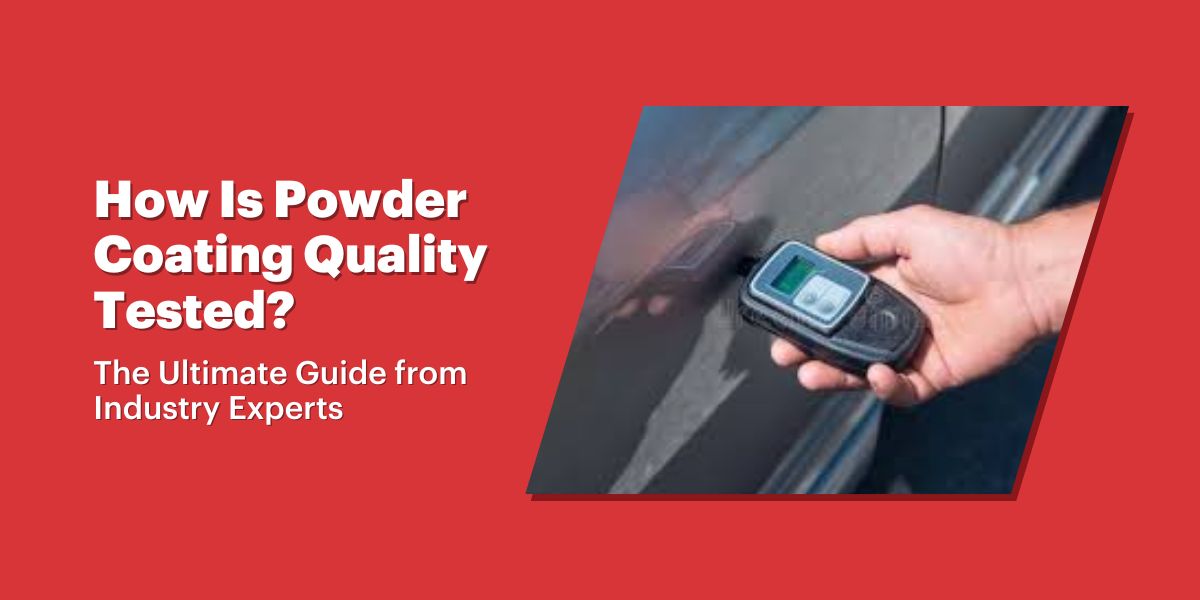
Our process: Using calibrated electronic thickness gauges, we measure coating thickness at multiple points before and after cure. We maintain statistical process control to ensure consistency within specified tolerances.
Quality standard: We typically maintain thickness variations within ±10% of target specification across the entire coated surface.
Beyond Testing: The Intech Advantage
Quality testing is just one component of our comprehensive quality system. Our 45-year commitment to excellence includes:
Advanced process control: Real-time monitoring of cure temperatures, conveyor speeds and environmental conditions
Continuous improvement: Regular evaluation of new testing methods and industry developments
Certification compliance: Full adherence to ASTM, AAMA, and customer-specific quality standards
Traceability: Complete documentation of all testing results and process parameters
Ready to Experience the Intech Quality Difference?
Don’t leave your coating quality to chance. With 45+ years of proven expertise and state-of-the-art testing facilities, Intech Surface Coating delivers the reliability your projects demand.
Contact us today for a comprehensive consultation and discover why industry leaders trust Intech Surface Coating for their most critical applications.
Frequently Asked Questions
How long do powder quality tests take?
Most tests can be completed within 24-48 hours, though salt spray testing requires extended exposure periods (typically 500-3000 hours depending on requirements). We provide preliminary results quickly and comprehensive reports upon completion.
Do you test every batch?
Yes. Our quality system requires testing representative samples from every production run. We maintain statistical process control charts to track performance trends and identify potential issues before they impact your parts.
Can you match competitor specifications?
Absolutely. We regularly help customers transition from other coating suppliers while maintaining or improving quality standards. Our extensive testing capabilities allow us to reverse-engineer performance requirements and often exceed previous suppliers’ results.
What happens if coating fails testing?
Any coating that fails our quality standards is immediately quarantined and investigated. We identify root causes, implement corrections, and reprocess affected parts at no charge. Our quality guarantee ensures you receive only coating that meets specifications.