

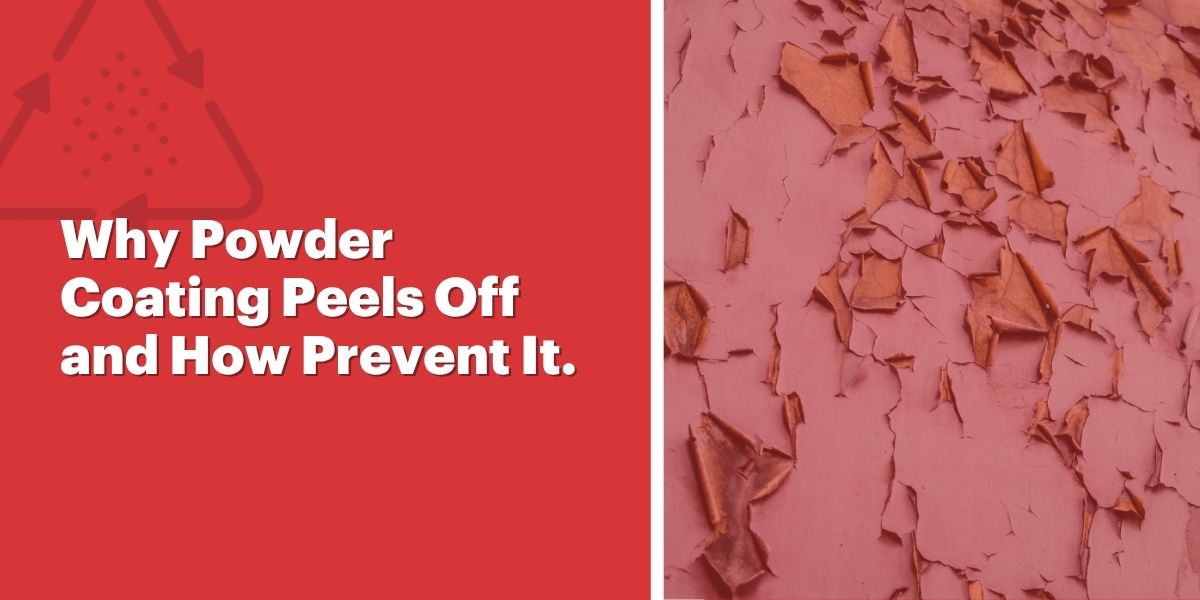
You visit an exhibition only to find that your newly powder-coated machines and parts have already started peeling within months an embarrassing moment for any manufacturer. That’s when you realize the importance of partnering with an experienced powder coating plant manufacturer who can ensure lasting quality and support, even in such situations. with Intech expertise understand Why Powder Coating Peels Off and How Prevent It.
The Hidden Cost of Powder Coating Failure
When powder coating peels, it’s not just an aesthetic problem it’s a business-critical failure that exposes underlying metal to corrosion, shortens product lifespan and damages brand reputation.
Recent industry data shows that poor surface preparation causes up to 85% of powder coating adhesion failures, yet most manufacturers still treat surface prep as an afterthought rather than the foundation of quality finishing.
As someone who’s designed powder coating systems for over 50 years and witnessed the evolution from basic spray booths to today’s sophisticated multi-stage pretreatment lines, I can tell you this: prevention is always more cost-effective than repair. Let me share the insider knowledge that separates successful operations from those constantly dealing with coating failures.
The Science Behind Why Powder Coating Peels and How to Prevent It.
Root Cause Analysis: Beyond Surface-Level Problems
After analyzing thousands of coating failures across different industries, I’ve identified the primary culprits that cause powder coating to lose adhesion:
1. Surface Contamination:
The Silent Killer The most common cause isn’t dramatic it’s microscopic. Oils from handling, residual lubricants from machining or even fingerprints create invisible barriers between the substrate and coating. According to recent industry studies, these contaminants prevent proper molecular bonding at the interface level.
2. Inadequate Surface Profile
Powder needs something to “grip” onto. A perfectly smooth surface, while visually appealing, offers minimal mechanical adhesion. The optimal surface roughness for powder coating ranges between 25-75 micrometers Ra, depending on the coating thickness and application requirements.
3. Moisture:
The Hidden Enemy Water trapped beneath the coating creates pressure points during thermal cycling, leading to blistering and eventual peel-off. This is particularly problematic in high-humidity environments or when parts aren’t properly dried after pretreatment.
4. Thermal Expansion Mismatch
Different materials expand and contract at different rates. When the coating and substrate have significantly different thermal expansion coefficients, stress fractures develop over time, especially in outdoor applications with temperature cycling.
The Multi-Stage Failure Process
Powder coating peeling rarely happens overnight. It follows a predictable pattern:
- Initial Adhesion Loss (microscopic level)
- Stress Concentration (at weak points)
- Crack Initiation (visible hairline cracks)
- Crack Propagation (spreading failure)
- Delamination (complete peel-off)
Understanding this progression allows for early intervention and prevents total coating failure.
Standard Prevention System
The Eight-Stage Pretreatment Revolution
At Intech Surface Coating, we’ve perfected an eight-stage pretreatment system that addresses every potential failure point:
Stage 1: Alkaline Cleaning – Removes oils, greases, and organic contaminants
Stage 2: Rinse – Eliminates cleaning residues
Stage 3: Acid Etch – Creates optimal surface profile
Stage 4: Rinse – Removes etching acids
Stage 5: Phosphate Treatment – Forms conversion coating for enhanced adhesion
Stage 6: Rinse – Cleans phosphate residues
Stage 7: DI Water Rinse – Final contaminant removal
Stage 8: Dry-Off Oven – Complete moisture elimination
This systematic approach increases adhesion strength by up to 300% compared to basic cleaning methods.
Advanced Surface Preparation Techniques
Media Blasting Optimization The choice of blasting media significantly impacts coating performance:
Aluminum Oxide: Best for ferrous metals, creates consistent 50-75 μm profile
Glass Bead: Ideal for aluminum, produces uniform 25-50 μm texture
Garnet: Excellent for stainless steel, minimal contamination risk
Chemical Pretreatment Selection Based on substrate material:
Iron Phosphate: Standard steel applications, 2-3 year durability
Zinc Phosphate: Marine environments, 5-7 year performance
Chrome-Free Alternatives: Environmental compliance, comparable performance
Environmental Control Systems
Temperature and humidity control aren’t luxuries—they’re necessities:
Booth Temperature: 65-75°F (optimal powder flow)
Humidity: 40-60% RH (prevents static issues)
Air Filtration: HEPA-level cleanliness
Electrostatic Monitoring: Real-time charge measurement
Your Powder Coating Success Strategy
Immediate Prevention Steps For Existing Operations:
Audit Your Pretreatment Process – Document every step, identify gaps
Test Surface Cleanliness – Use water break test or contact angle measurement
Monitor Coating Thickness – Maintain 2-4 mils for optimal performance
Implement Quality Checkpoints – Crosshatch adhesion testing at regular intervals
For New Installations:
Invest in Multi-Stage Pretreatment – The foundation of quality coating
Specify Environmental Controls – Don’t compromise on booth conditions
Plan for Quality Testing – Build inspection protocols into your workflow
Train Your Team – Skilled operators prevent more problems than equipment
Repair vs. Replacement Decision Matrix
When coating does fail, use this decision framework:
Repair Candidate (localized failures <10% surface area):
- Strip affected areas to bare metal
- Blend edges to prevent coating steps
- Reapply complete coating system
- Expect 70-80% of original performance Complete
Recoating (failures >10% surface area):
- Full strip to substrate
- Complete pretreatment cycle
- Fresh coating application
- Restore 100% performance capability
Quality Monitoring Protocol
Implement these testing procedures:
| Daily Checks: | Weekly Testing: | Monthly Validation |
| Booth temperature/humidity | Coating thickness measurement | Crosshatch adhesion testing |
| Powder charge voltage | Visual defect inspection | Salt spray sample preparation |
| Spray pattern consistency | Adhesion spot checks | Process parameter verification |
Preventive Maintenance Schedule
| Equipment Maintenance | Documentation Requirements |
| Spray Guns: Weekly cleaning, monthly calibration | Process parameter logs |
| Booth Filters: Monthly replacement, continuous monitoring | Quality test results |
| Ovens: Quarterly temperature profiling, annual calibration | Equipment maintenance records |
| Pretreatment Tanks: Weekly chemical analysis, monthly replenishment | Coating performance tracking |
Why Partner with Intech Surface Coating?
Intech’s five decades of experience have taught us that powder coating success isn’t about fixing problems it’s about preventing them. Our eight-stage pretreatment system, combined with rigorous quality controls and continuous process monitoring, delivers consistently superior results.
Intech’s Commitment to Excellence:
- Zero-Defect Goal: We aim for perfection in every coating application
- Fast Turnaround: High-volume processing capabilities
- Technical Support: Expert consultation throughout your project
- Quality Guarantee: Performance-backed coating systems
Ready to Eliminate Powder Coating Failures?
Don’t let coating failures damage your reputation or increase your costs. Contact Intech Surface Coating today for a comprehensive evaluation and understand Powder Coating Peels Off and How Prevent It. Our expert team will design a custom solution that prevents peeling, extends coating life and delivers the quality your customers expect.
Get Your Free Quote